

Te Pōrere Diorama
- Zarahn Southon
- Nov 7, 2022
- 4 min read
Updated: Mar 22, 2023
Ko tō tātou whakapapa nō Ngāti Kurauia
1. Kurauia = Maui (18thC)
2. Tutunui
3. Taoroa
4. Tirangaro
5. Katarina Pikiao = Paurini Karamu (Battle of Te Pōrere 1869)
6. Kataraina Paurini = Rota Wakauta
7. Te Hirata Wakauta = Matene Ngakuru
8. Paekitawhiti (Nee Ngakuru) Asher = John Te Atirau Asher
9. Rowena Irihau Asher Southon = Joseph Vita Southon
10. Hugh Rongomainohorangi Southon = Lynda Bennett Southon
11. Zarahn Tūwharetoa Southon = Samantha Tania Sperlich
12. Karamu Southon & Luca Tia Southon
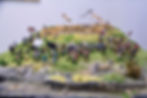
During last year’s lockdown, my children and I were busy creating a historical diorama of the Pā at Te Pōrere located in the Tongariro National Park of Te Ika-a-Maui, Aotearoa. The Pā was a fortified redoubt constructed in 1869 by members of Ngāti Tūwharetoa for the Tohunga Te Kooti Te Arikirangi Te Tūruki (Ngāti Maru) and his followers to engage the Crown. The pā at Te Pōrere was the site of the final battle of the New Zealand Wars.

In 1865 Te Kooti was unjustly arrested, tried, and exiled to the Chatham Islands before escaping from captivity in 1868. The Crown along with Māori auxiliaries pursued Te Kooti as he evaded capture. Te Kooti proved a formidable opponent in guerrilla warfare and constantly outwitted his pursuers.
In 1869 Te Kooti arrived in my tribal area of Ngāti Tūwharetoa at Tokaanu, located south of Lake Taupō, in the Tongariro National Park. My hapū (sub-tribe) is Ngāti Kurauia. Te Kooti arrived at Tokaanu, intending to settle further to the south at Papakai and with the hope of forming an alliance with the Kingitanga, which was also fighting against the Crown.
Unfortunately for Te Kooti the alliance never came to fruition and Te Kooti engaged the Crown and Māori auxiliaries of 500 soldiers with barely 200 combatants.

On October the 4th 1869, after a bloody gun battle, the Te Pōrere redoubt was captured by Crown forces and Te Kooti’s combatants suffered heavy losses. Te Kooti was able to escape and after living in the Urewera eventually settled in the King Country protected by the Māori King until he was pardoned in 1883.
Not far from the Te Pōrere Pā is our marae at Tokaanu. My whānau along with many other extended families are the Southon Asher Paurini hapū of Ngāti Kurauia. Ngāti Kurauia is one of 26 hapū (sub-tribe) of the Ngāti Tuwharetoa confederation of the central North island. In the mid-19th century, the Ngāti Tūwharetoa confederation had 144 hapū (sub-tribe) however over 100 years later these hapū have been amalgamated into the surviving 26 today, sadly suffering the dreadful impact of war, mass land loss, and colonisation.


At the time of the battle in 1869, my four times great grandparents Paurini Karamu and his wife Katerina Pikiao along with members of their whānau were impacted by the presence of Te Kooti and the armed Crown forces and Māori auxiliaries in pursuit.
Paurini Karamu and Katarina were both Rangatira of Ngāti Kurauia and frequently met with Te Kooti and the Crown in the hope of averting war. Sadly they were unable to stop the war and the catastrophic consequences that ensued. The invasion by Crown forces had devastating impacts on Māori families living at Tokaanu at the time since following the war it became a garrison town. I will write about the deeper history relating to Te Pōrere and our whakapapa at a later date,

There are some great books about the New Zealand Wars, and particularly helpful for the diorama were both Judith Binney’s Redemption Songs and Ormond Wilson’s War in the Tussock. These books contain detailed maps of the redoubt including maps drawn by Lieutenant McDonnell.
In 2018 my son and I along with whanau stayed at our marae at Tokaanu to do a reconnaissance of the redoubt and pay respects to the 30 persons of Ngāti Tūwharetoa buried there. If you visit this area be mindful that it is a wāhi tapū area, meaning visitors should respect the redoubt as if it were a urupā (cemetery).


This diorama is similar to the many taonga (treasures) that were used as educational tools by my grandparent's generation to teach children about their whakapapa at Tokaanu. Some of this history was taught to us by our great aunties at the Grace Museum at Tokaanu.


Not only were they great orators but thoroughly researched archivists too, you can watch Aunty Snowy (Agnes Mary Hikairo Grace) along with her mother Te Reiti Tamara Grace talking about the film Hei Tiki on the website NZ on Screen. Agnes' uncle John Te Herekiekie Grace the author of the book Tuwharetoa was particularly helpful with Ormond Wilson's research for his book The War in the Tussock.

Creating Historical dioramas can be a great educational tool to learn and connect with history, or in my case teaching my children their whakapapa. From researching, to the planning process, working with plaster of paris, creating terrain textures, and finally painting the figurines (we added red coats even!), the project is a great way to spend time in a creative adventure. The end result can be used as an educational tool in the classroom alongside mātauranga māori concepts especially if Māori are the teachers of our history.

The Te Pōrere diorama is a focal point for teaching Aotearoa history and as a vehicle for teaching our whakapapa to our children within Ngāti Tūwharetoa. The history of Te Pōrere opens further discussions about the NZ Wars and the lasting impacts of colonialism and the relationship between Māori and Pākehā in Aotearoa today.


